USPS Last Mile Bids: Private Partners vs. In-House Delivery
The final mile is where parcel economics go to die. A box can move hundreds of miles in a full trailer for pennies per unit, then burn through the same margin in the last few blocks: scattered stops…
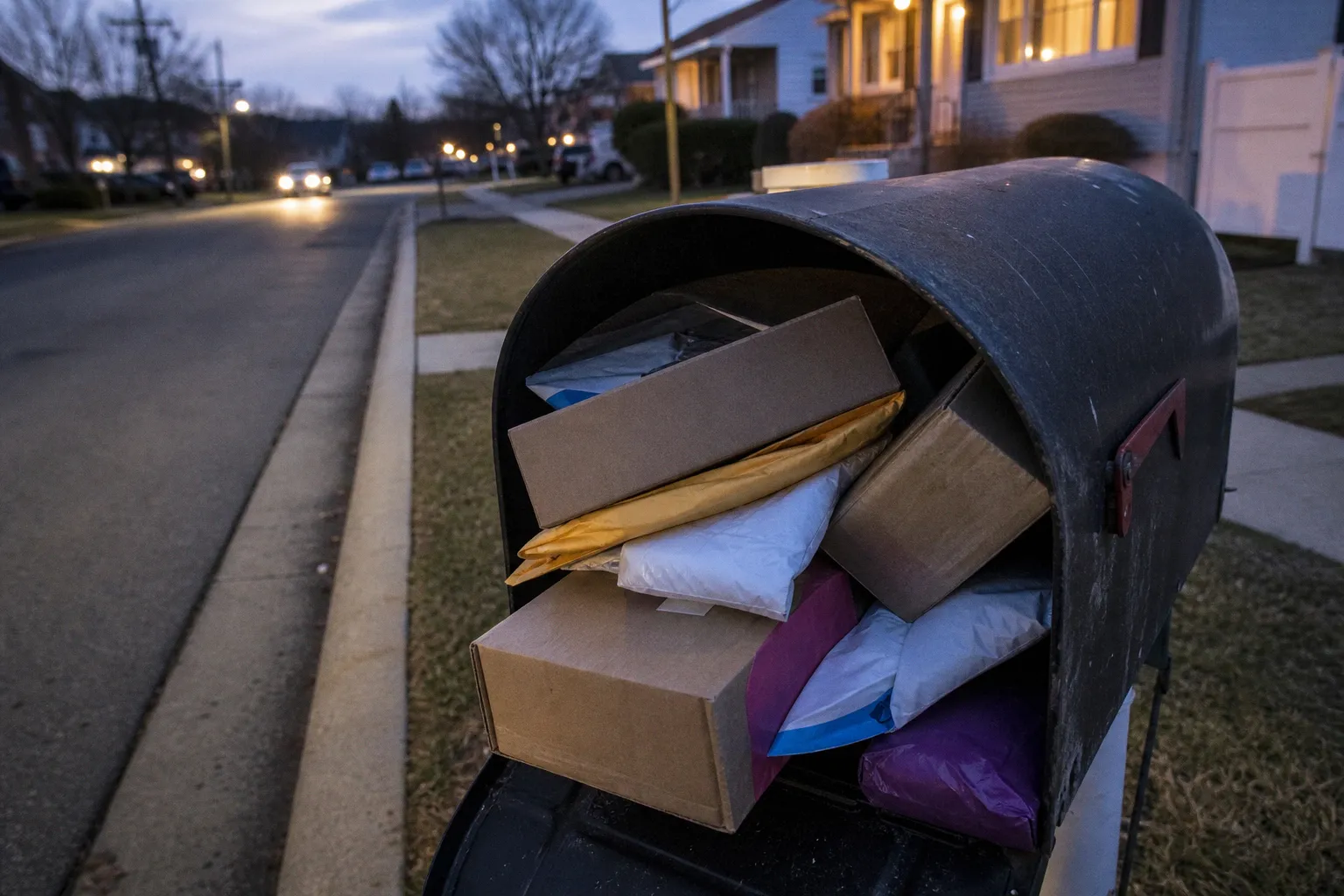
The final mile is where parcel economics go to die. A box can move hundreds of miles in a full trailer for pennies per unit, then burn through the same margin in the last few blocks: scattered stops, missed handoffs, residential density that looks good on a map and performs badly at the curb.
USPS sees the unused space in that problem. Its January 2026 bid platform opened more than 18,000 destination delivery units and local processing centers to shippers that want to inject parcels close to the delivery route. The pitch is blunt: private operators handle pickup, sortation, and linehaul; USPS takes the parcel from the local entry point to the doorstep, same day or next day under negotiated terms.
This is not USPS outsourcing its carriers. It is USPS selling access to a delivery network that already reaches more than 170 million addresses at least six days a week. That distinction matters. For e-commerce operators, the real comparison is not “postal service versus private carrier.” It is last mile outsourcing versus building, staffing, and feeding your own local delivery operation.
And that math gets ugly fast once the order map leaves a dense urban core.
USPS is monetizing route capacity, not reinventing the network
USPS seeks bids for last mile deliveries to increase revenue because it has a network with massive fixed costs and uneven parcel utilization. The trucks, carrier routes, delivery units, supervisors, facilities, and neighborhood coverage do not disappear because a route runs light on parcel volume. A carrier still drives the route. The building still opens. The labor clock still runs.
Selling incremental parcel capacity is the logical move—provided those parcels enter the network cleanly and do not jam the floor.
Reuters reported in late 2025 that USPS was selling roughly 1.7 billion units of last-mile capacity, against estimated total capacity of 3.5 billion to 4 billion units. That gap is the commercial target. It is not free capacity in the casual sense. Every added package still needs a scan, staging space, route assignment, and a clean handoff into the carrier’s day. But the marginal cost can be attractive when the existing route and delivery infrastructure are already moving.
USPS has a hard financial reason to pursue that volume. It reported $20.2 billion in operating revenue for fiscal Q2 2026, up 2.3% year over year, while posting a $2.0 billion GAAP net loss for the quarter. Nobody should mistake this portal for a cute innovation project. It is a revenue strategy built around getting more cash out of physical assets that are already expensive to maintain.
For retailers and fulfillment providers, that changes the conversation. The old model was largely limited to very large customers that could arrange direct entry into destination delivery units. The new portal gives a broader set of shippers a path to propose volume, price, and tender time at specific local locations.
That is much more granular than buying a national parcel label and hoping the carrier network behaves.
The last mile does not become cheap because someone calls it a partnership. It becomes cheaper only when parcels arrive where the route already has room to carry them.
The bid portal turns Parcel Select into a local capacity market
The January 20, 2026 launch matters because it shifts access from relationship-driven scale to a formal proposal process. More than 1,200 companies and individuals had requested portal access by February 5. USPS made clear that not all registrants would qualify as bidders, which is sensible. A delivery unit is not a public loading dock.
Under the solicitation structure, a bidder can put forward three operational variables for each available location:
1. Volume: How many parcels the shipper can reliably tender into that DDU or local processing center. Not an optimistic spreadsheet forecast—real, repeatable daily or weekly volume.
2. Price: What the shipper is willing to pay for the final-mile capacity. This is where the bid becomes a commercial decision rather than a standard published-rate transaction.
3. Tender time: When the parcels will hit the local operation. This may be the most important field of the three, because a late trailer can wreck the useful part of same-day or next-day service.
Accepted proposals are expected to be formalized through negotiated service agreements for Parcel Select. Those agreements can set contract duration, critical entry times, and other operating terms.
The missing public detail is just as important as the published detail. USPS has not released every award, every bid price, every location, or standardized service-level rules across agreements. There is no public master table showing package-size limits, volume minimums, claims handling, cancellation terms, or the exact performance standards for every deal.
Operators should not fill those blanks with wishful thinking.
A postal service delivery bid that works in one metro can be a margin leak in another. The labor cost to sort at origin, the linehaul schedule, local dock access, trailer dwell, and order-density pattern all change by market. The portal creates access; it does not eliminate network design work.
What the portal is—and what it is not
| Operating question | USPS bid model | In-house last-mile delivery |
|---|---|---|
| Who completes delivery to the address? | USPS carrier network | Retailer, 3PL, DSP, or local courier fleet |
| Who controls upstream pickup and linehaul? | Private shipper or partner | Retailer or contracted logistics provider |
| Main fixed-cost burden | USPS carries route and local delivery infrastructure | Operator carries fleet, dispatch, labor, insurance, and local facilities |
| Control over customer experience | Limited by negotiated terms and USPS operating model | High, if the operator can fund and manage it |
| Best fit | Broad residential coverage and reliable local injection volume | Dense, repeatable stop clusters with enough parcel density |
| Core operational risk | Missed entry times, poor sort quality, unclear deal-level rules | Deadhead miles, low stops per hour, driver churn, and route underfill |
The table is not a declaration that one model wins. It is a reminder that “control” is expensive. Plenty of e-commerce teams talk about owning the customer experience right up until they have to pay a driver to make three failed deliveries in a spread-out suburb.
Private partners carry the upstream load. USPS carries the doorstep.
The cleanest way to understand a USPS last mile partnership is to split the chain into two parts.
First comes the upstream work: parcel pickup from merchants or fulfillment centers, induction planning, sortation, containerization, linehaul, and arrival at the correct local entry point. This is where private operators can create value. A strong partner consolidates volume, fills trailers, keeps labels and manifest data clean, and arrives on time.
Then comes final delivery: USPS takes possession at the designated local point and delivers to the address.
That division of labor is not cosmetic. It puts each operator where it has structural advantages. A regional carrier, 3PL, or e-commerce consolidator may be better at assembling merchant volume and feeding a hub-and-spoke network. USPS is already built for the last stretch to rural roads, apartment buildings, suburban cul-de-sacs, and low-density addresses that make private last-mile fleets sweat.
But the handoff is also where execution falls apart.
A warehouse team that treats destination injection like ordinary outbound shipping will get punished. You cannot just close a trailer, send an ASN, and declare victory. The local facility has a cutoff. It has receiving limits. It has a physical floor with a finite amount of staging room. If mixed containers arrive late, manifests do not reconcile, labels fail, or parcels require exception handling, the supposed cost advantage turns into dwell and rework.
The recurring failure points are not glamorous:
- Tender times get treated as flexible. They are not. Miss the critical entry window and the parcel may lose the service window that made the deal worthwhile.
- Sort plans follow ZIP-code logic instead of actual induction logic. A network can be geographically “close” and still operationally wrong if volume is not routed to the agreed location.
- Linehaul is booked too tightly. One traffic delay, one slow unload, one driver-hours issue, and the trailer arrives after the useful cutoff.
- Parcel data and physical freight drift apart. A clean manifest does not save a messy pallet. Nor does a perfect pallet save invalid data.
- Returns are ignored. The outbound route may work while reverse logistics becomes a pile of untracked parcels and disputed scans.
This is why the real competition is not carrier brand versus carrier brand. It is disciplined upstream execution versus the high fixed cost of owning all the way to the door.
In-house delivery only wins when density pays the bills
There is a persistent belief in digital commerce that bringing delivery in-house automatically produces better unit economics. Sometimes it does. Most of the time, it produces more operating complexity wearing a customer-experience badge.
An in-house fleet can outperform a postal injection model when the operator has a tight delivery radius, predictable volume, high stop density, and enough order concentration to keep drivers productive. Grocery, prepared food, urban same-day retail, bulky local goods, and high-frequency replenishment can justify direct control. The fleet can combine delivery with returns pickup, scheduled time windows, installation, or customer service recovery.
But the density requirement is ruthless.
If vans leave half full, if drivers deadhead back to a suburban dispatch point, if dispatchers build routes around late order releases, or if residential stops are scattered across three counties, the cost per parcel climbs quickly. Add vehicle downtime, insurance, fuel or charging infrastructure, driver turnover, route optimization software, customer support, claims, and peak-season reserve capacity. Suddenly “owning the last mile” looks less like differentiation and more like buying a very expensive labor problem.
USPS final-mile access is attractive precisely because it avoids much of that fixed-cost pile. The operator can retain control over upstream sortation and linehaul while using a mature delivery footprint for the least efficient leg.
That does not mean USPS is automatically the low-cost option. Bid economics need to be measured against the full in-house alternative, not against a fantasy number.
A useful margin model should include:
- outbound pick-and-pack labor and whether the order can flow through the existing fulfillment operation without a second touch;
- packaging cost, especially if parcel dimensions push the shipment into a less favorable profile;
- origin sortation and consolidation labor;
- linehaul cost per inducted parcel, including trailer utilization and backhaul availability;
- local injection labor, appointment or dwell exposure, and missed-cutoff risk;
- negotiated final-mile price;
- customer-service and claims cost;
- return routing and processing cost;
- the avoided cost of vans, drivers, dispatch, local facilities, and idle fleet capacity.
Do not compare only a USPS rate to a courier rate. Compare total landed delivery cost, including the ugly stuff that sits in separate departmental budgets.
If your local fleet needs heroic routing every afternoon to look economical, it is not economical. It is subsidized by optimism.
Same-day and next-day service live or die at the dock door
USPS described same-day or next-day final delivery as an available service outcome for successful bidders. The key word is available. It is not a blanket promise for every parcel in every market.
The negotiation can include critical entry times, and that is where the service claim becomes real or fictional. A merchant may have inventory five miles from a destination delivery unit and still miss next-day delivery if orders release late, the sort wave starts late, the linehaul leaves late, or inbound receiving misses the handoff window.
For fulfillment operators, this means the order-management system and warehouse management system have to stop treating carrier cutoff times as static configuration fields. The operating plan needs to account for actual local induction schedules and trailer departure discipline.
A workable model usually has three layers:
1. Inventory has to sit near demand, not merely near cheap warehouse rent
Late-stage injection cannot rescue inventory that starts 800 miles away at 4 p.m. Merchants using this model need an inventory positioning strategy that puts fast-moving SKUs within a practical upstream sort-and-linehaul radius of the relevant destination network.
That does not require a warehouse in every metro. It does require honesty about demand concentration. A national SKU assortment with shallow regional stock often creates split shipments, delayed replenishment, and costly transfer moves. The last-mile deal then becomes a patch over an inventory problem.
2. The fulfillment floor must protect the cutoff
The warehouse needs a defined order-release time, pick wave, pack completion target, trailer-close time, and contingency plan for exceptions. This is basic floor discipline, but it is exactly where margin gets lost during peak volume.
If a promised injection lane requires parcels at a local USPS facility by a specific hour, pack stations cannot be feeding that lane through a casual end-of-day sweep. Build the cutoff backward from the local entry time. Staff to it. Measure miss rates. Put a real owner on it.
3. Exception handling needs a financial threshold
Not every late parcel deserves a rescue move. Paying for a dedicated courier run to save one low-margin package is how operators quietly destroy their own contribution margin.
Set a threshold. If the cost to recover a missed tender exceeds the expected margin retention or customer-lifetime-value protection, roll the parcel to the next cycle and communicate accurately. Reserve expensive recovery actions for high-value orders, contractual commitments, or customers where the economics justify it.
This is not customer-hostile. It is the difference between managing a network and performing panic logistics.
The DHL deal shows the scale of the upstream opportunity
The separate multi-year agreement announced by DHL eCommerce and USPS in May 2026 puts a large dollar sign on this operating model. The arrangement is expected to exceed $10 billion, with DHL handling pickup, sorting at 19 automated U.S. hubs, and linehaul before USPS performs final delivery.
That is the industrial version of the portal’s basic logic: keep the volume-building, automation-heavy upstream work in the private network; use USPS for doorstep coverage.
DHL’s 19 automated hubs are not just a press-release detail. Automated sortation, reliable linehaul cadence, and consolidated merchant volume are what make a handoff model viable at scale. A private operator that cannot build dense upstream flows will struggle to extract value from final-mile capacity, even if it wins attractive terms at local entry points.
Still, operators should not assume the DHL agreement came from the January bid platform. Public information does not establish that link. It is a separate announced arrangement, and the difference matters. Large negotiated commercial deals and portal-based bids can share an operating logic without being the same transaction.
The broader lesson is straightforward: USPS has a network worth buying access to, but access alone is not a fulfillment strategy. The winners will be the operators that can aggregate volume, control their linehaul, maintain clean parcel data, and arrive at the right facility before the floor turns hostile.
Price the deal like a warehouse operator, not a growth deck
The biggest mistake would be treating the new USPS revenue strategy as a shortcut around hard logistics work. It is not. It is a new purchasing option for final-mile capacity.
For a merchant with dispersed residential demand, a fragmented order map, and no appetite for fleet ownership, the model can remove a large block of fixed cost. For a 3PL with several clients shipping into the same metro areas, it can create a useful consolidation play—if it can load consistently and hit the induction windows. For a retailer with dense local demand and a mature delivery fleet, in-house delivery may still win, especially where scheduled service, returns pickup, or white-glove handling matter.
The ROI test is not complicated:
- Can you create enough volume by destination to fill upstream transportation efficiently?
- Can your pick-and-pack operation reliably protect the required tender time?
- Does the negotiated last-mile cost beat the fully loaded cost of your own routes?
- Can you absorb peak volume without buying idle fleet capacity for the other ten months of the year?
- Do returns and claims stay traceable after the handoff?
If the answer is yes, USPS local injection can be a serious margin tool. If the plan depends on vague service assumptions, occasional late linehaul, or “we will figure out the exceptions,” keep the parcels in the current network until the floor is ready.
USPS is trying to sell more of a route it already has to run. That is rational. Shippers should be just as rational: buy the capacity only when the upstream operation is tight enough to turn a postal handoff into lower cost per delivered order—not another expensive parcel story for the Monday operations call.