What is last mile delivery: compare courier vs postal services
Your COGS is lying to you. Hiding inside that shipping line item is a 53% monster — the last mile.
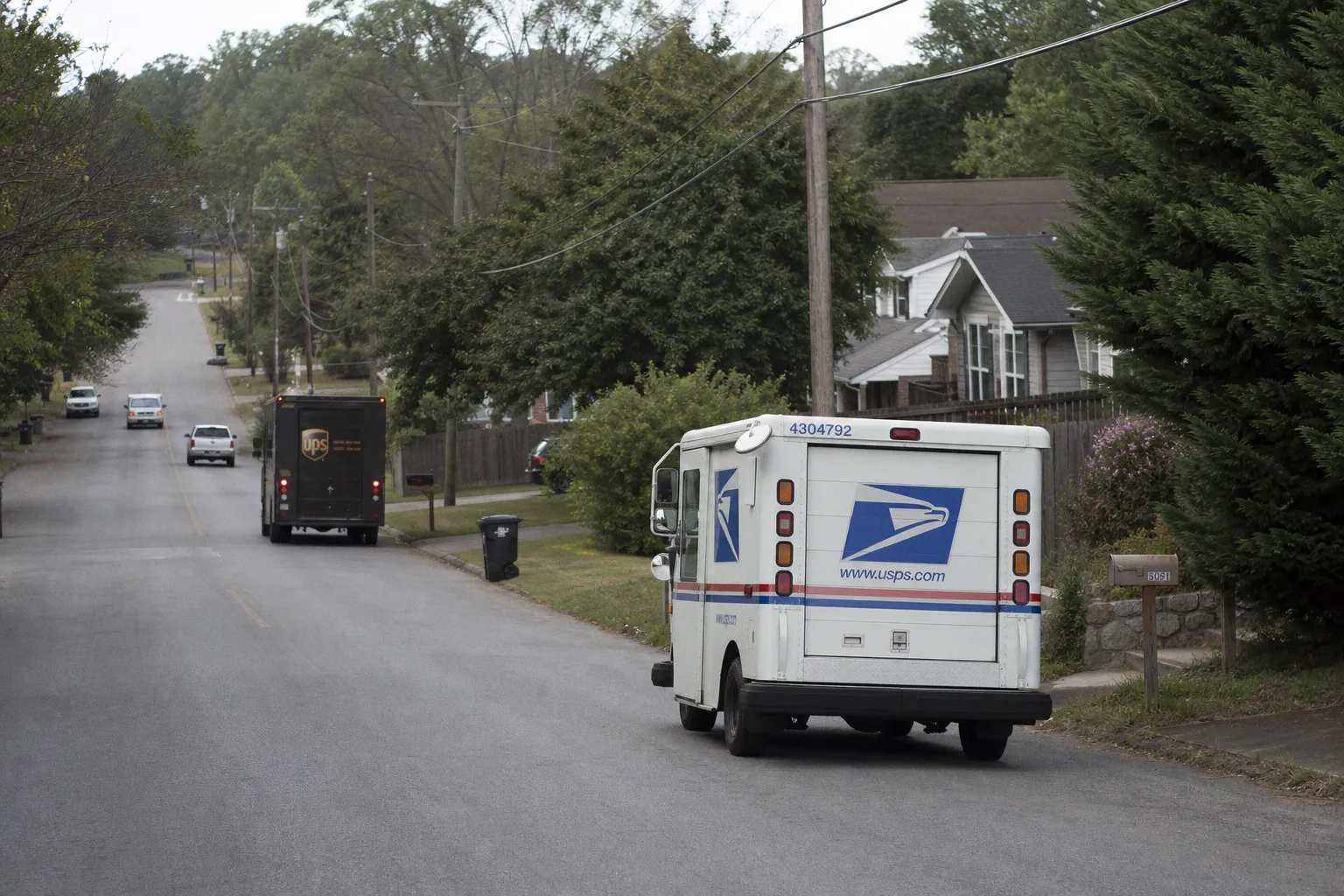
What is Last Mile Delivery: Courier vs Postal Services
The Economics of the Final Mile: Why It Consumes 53% of Total Shipping Costs
Here's the math nobody puts on the slide deck. Last mile eats roughly 53% of total shipping costs across the average supply chain — published industry range pegs it as high as 20–30% of total logistics costs in some e-commerce verticals, with the upper bound biting hardest in dense urban DTC. Why so brutal? Three forces compound:
1. Labor intensity. Every parcel needs a human handler at the very end. One driver, one van, one stop. There is no economy of scale at the doorstep.
2. Failed delivery attempts. A first-attempt miss burns driver time, fuel, and re-attempt fees. Industry data puts first-attempt success in the 75–85% range; the misses pile up fast.
3. Urban friction. Traffic, parking, building access, lift queues, signature requirements — every meter in a downtown grid costs more than a kilometer on the highway.
When I audit a brand's P&L, the first place I hunt for unlocked margin is this line. If your LTV is $85 and your last mile cost is $14, you don't have a CAC problem. You have a logistics problem dressed up as marketing. Cut that $14 to $9 by picking the right carrier mix, and your contribution margin does more for ROAS than any new ad creative ever will.
Last mile is the single biggest unlocked margin lever in e-commerce — bigger than ad copy, bigger than landing pages, bigger than any funnel hack you'll read about this quarter.
The operators who treat last mile like a real P&L line — not a "shipping fee" buried in checkout — are the ones still printing EBITDA while competitors burn cash on paid social chasing the same vanishing CTR.
Courier Services: Precision, Real-Time Tracking, and Premium Speed
Couriers — FedEx, UPS, DHL, regional players like OnTrac and Lasership — sell you three things the postal networks structurally can't match: speed, accountability, and data fidelity. You're paying for a 1–2 day SLA, real-time GPS tracking pings, signature or photo-POD capture, and an operations team that picks up the phone when something breaks.
When couriers win:
- Time-sensitive SKUs (pharma, perishables, gift windows).
- High-AOV orders where customers expect white-glove tracking.
- Dense metro routes where route density lets couriers hit 120+ stops per shift.
- B2B replenishment with strict service-level commitments.
- Premium tiers you can monetize — overnight, Saturday, AM delivery slots.
The cost of that premium is real. Couriers typically run 2–4x the per-parcel rate of postal for equivalent weights, and accessorial fees — signature, residential surcharge, fuel, dimensional weight adjustments — stack up ruthlessly. I've seen $9 shipments balloon to $22 after accessorial creep. If you're not auditing dimensional weights monthly, you're funding the carrier's Q4.
The data side is where couriers become a growth weapon, not just a cost. Every scan, every geofence entry, every delivery photo lands in your WMS or OMS. You can pipe it into a customer-facing tracking page, fire off proactive EDD comms, and reduce "where is my order?" WISMO tickets — which routinely eat 15–20% of CX headcount. Slash WISMO in half, and you've funded an entire growth hire without touching CAC.
The same instinct that drives me to track every fulfillment KPI down to the cent is what you find in operators who live inside charting platforms and signal dashboards — they're hunting for micro-edges the rest of the market ignores. Same game, different asset class.
National Postal Networks: Leveraging Infrastructure for Rural and Lightweight Reach
USPS, Royal Mail, Canada Post, La Poste, Deutsche Post — these aren't slow legacy dinosaurs. They're subsidized infrastructure moats with legs the private couriers will never match. Postal networks reach every mailbox in the country, including rural codes couriers either skip or surcharge into oblivion. For lightweight packages under 1 lb, postal rates routinely crush courier rates by 40–70%.
When postal wins:
- Lightweight SKUs — cosmetics samples, apparel accessories, supplements.
- Rural and remote destinations where courier surcharges punish you.
- Standard delivery tiers where 3–7 day windows match customer expectation.
- High-volume, low-value shipments where every dollar of delivery cost is a margin dollar.
The tradeoff is consistency. Tracking visibility on standard postal services typically degrades to scan-level granularity — origin, destination hub, out for delivery, delivered — without the GPS-grade fidelity couriers provide. First-attempt success rates drop. Customer complaints about transit time climb. WISMO load increases.
The mistake I see every week: brands defaulting to couriers for everything because the tracking looks "premium" in the post-purchase email. That's a vanity metric. The right question is: does a $4 postal shipment with a 5-day window lose you repeat purchase rate compared to a $12 courier shipment with a 2-day window? Most categories — apparel, supplements, home goods — the answer is no. Don't pay courier rates to deliver a $29 t-shirt.
A second mistake: not negotiating. Postal operators run published rates, but commercial shipping software platforms and aggregated 3PLs unlock negotiated tiers that print savings you didn't know were available. Lock those rates before peak season, or you pay retail through Q4.
Navigating the 'Final 50 Feet': Operational Hurdles in Urban and Secure Environments
The "final 50 feet" is where every operations manager I've worked with has lost a piece of their soul. It's the distance from the courier's parked van to the customer's actual hands — apartment lobbies with no concierge, secure buildings requiring fobs, gated communities, workplaces with no dock, parcel lockers with no available slots, theft-prone porches in dense urban corridors. The package is "delivered" per the POD scan; the customer is furious.
Three failure modes destroy margin here:
1. Theft and porch piracy. Lost parcel, full refund, reverse logistics, angry review, churned LTV. The cost of a stolen parcel is typically 3–5x the shipping cost once you account for replacement, refund, and replacement CX load.
2. Secure delivery friction. If the driver can't get into the building, the parcel goes back to the depot. Reattempt fees stack. The customer never receives the package and blames you, not the building.
3. Returns explosion. Failed or delayed final mile delivery is a top-3 driver of returns initiation. Returned goods trigger reverse logistics flows that cost another 5–15% of order value.
Mitigation moves that actually work:
- Photo POD plus doorstep drop as default for low-risk SKUs.
- Locker networks (Amazon Hub, Parcel Pending, Luxer One) for urban multi-dwelling units.
- Local micro-fulfillment in metros — ship from within the city, not from a regional hub 200 miles out. Same-day is a CTR-doubling differentiator at the PDP and a margin unlock at the bottom line.
- Customer-controlled delivery options — date, time window, neighbor drop-off — handled at checkout, not buried in a post-purchase email.
- Tracking-trigger comms — automation that fires proactive updates based on scan events, not on email opens.
Operators who crack the final 50 feet don't just cut cost. They convert delivery from a friction point into a retention lever. Every clean delivery is a quietly compounding LTV signal.
Strategic Hybridization: Balancing Cost and Customer Experience in Modern Fulfillment
The real play isn't courier vs postal. The real play is courier AND postal, deployed surgically. You don't pick a winner. You build a carrier matrix and route every order through the optimal lane based on weight, destination, SLA tier, and order value.
Here's the carrier matrix I'd build today for a mid-volume DTC brand shipping 50–200 orders a day:
| Order Profile | Primary Carrier | Backup / Overflow | Why |
|---|---|---|---|
| Standard, <1 lb, residential, non-rural | National postal | Aggregator 3PL | Cost dominance, decent scan tracking |
| Standard, 1–5 lb, residential | Aggregated courier (UPS/FedEx negotiated) | National postal | Balance of cost and reliability |
| Expedited, time-sensitive, AOV >$75 | Premium courier | Regional courier | SLA guarantee justifies the spend |
| Rural / remote ZIP, any weight | National postal | Courier with surcharge approval | Postal reach kills surcharge tax |
| B2B / bulk replenishment | LTL freight + courier last mile | Dedicated 3PL network | Dimensional weight optimization |
| Same-day metro | Local courier / gig network | In-house dark store | CTR + LTV multiplier at PDP |
The hybrid model isn't theory. It's how every operator at scale runs. The implementation requirements:
- A WMS or OMS with multi-carrier rate shopping at checkout — don't make the carrier decision manually for every order.
- Negotiated rates across at least three carrier categories: postal, national courier, regional courier.
- Real-time cost dashboards by lane, by weight break, by destination zone. If you can't see last mile cost per order in real time, you're flying blind.
- Dynamic SLA selection at checkout — let the customer pick speed, and let them pay for the difference. Free shipping on a 5-day window is a margin feature, not a discount.
- Returns pipeline built before peak, not after.
The brands that execute this matrix win on three vectors simultaneously: lower CAC (because ROAS improves on margin-funded ads), higher LTV (because on-time delivery is the single biggest non-price predictor of repeat purchase), and operational optionality (because they're not locked into a single carrier's quarterly rate hike).
Last mile isn't a logistics problem. It's a growth problem wearing brown shorts.
Stop treating shipping as a cost of doing business. Treat it as the conversion lever it actually is. Audit your last mile P&L this week. Renegotiate your carrier mix before next quarter. Build a hybrid matrix by EOM. Every parcel you ship is either a margin dollar or a leak — your job is to know which one before the tracking number prints.