Retail Automation Strategies: Scaling AI and Robotics for Modern Commerce
According to SNS Insider, retail automation was estimated at $29.35 billion in 2025 and is projected to reach $74.56 billion by 2035, with a stated 9.77% CAGR for 2026–2035. The signal for commerce operators is not “AI in retail” as a category.
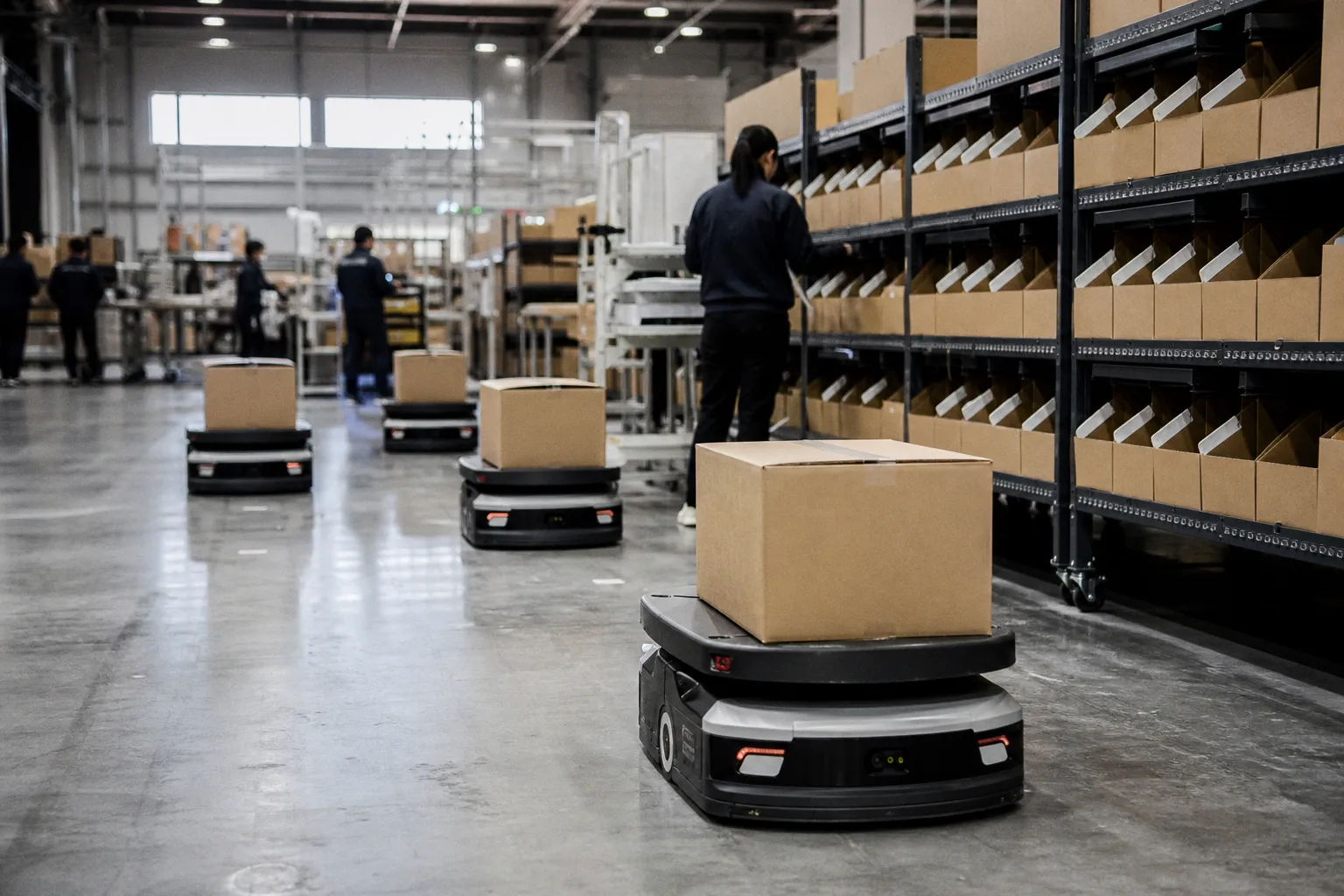
It is the widening deployment stack: checkout, shelf data, POS, inventory logic and fulfillment automation.
For digital retailers, the relevant question is where automation improves transaction throughput and inventory accuracy without creating a fragmented operating layer.
The spend is still concentrated at the store edge
SNS Insider says in-store implementations represented 57.8% of retail-automation revenue in 2025. The cited stack includes self-checkout kiosks, electronic shelf labels, smart POS terminals and AI-based customer-service tools.
That concentration matters because these systems sit directly on high-frequency retail events:
- price changes;
- stock visibility;
- payment authorization;
- basket completion;
- customer-service routing.
Each event needs deterministic attribution across store, app, web and fulfillment systems. A shelf label that does not reconcile with the commerce platform, or a POS that publishes delayed inventory updates, creates operational latency rather than automation value.
The report also identifies cloud-based POS, computer vision and AI-enabled checkout as technologies being deployed in connected stores. These are not interchangeable purchases. POS is a transaction system of record. Computer vision is an interpretation layer. Checkout automation is a customer-facing workflow. Operators should not measure all three against the same KPI.
Warehouse automation is the growth variable
SNS Insider describes warehouse automation as a fast-growing driver within the market. For e-commerce teams, this is the segment with the clearest connection to order throughput, picking workflows and inventory-control accuracy.
The implementation sequence matters:
1. Establish a reliable inventory baseline.
2. Map order, return and replenishment events.
3. Measure exception volume before deploying robotics or AI analytics.
4. Confirm that warehouse events synchronize with storefront and marketplace availability.
Automation cannot correct inconsistent product, location or inventory data by itself. It can process those errors faster and propagate them across more channels.
The report links adoption to labor costs, e-commerce penetration and the need to streamline processes and reduce errors. Those are plausible deployment pressures, but the investment case still depends on measurable system constraints: orders per hour, stock-adjustment frequency, checkout abandonment, fulfillment exceptions and reconciliation delay.
What to validate before committing
SNS Insider estimates the U.S. retail-automation market at about $7.19 billion in 2025, projected to reach $18.32 billion by 2035. It attributes U.S. activity to self-service checkout, retail analytics using AI and connected-store technology.
For operators, the immediate validation list is narrower than the market forecast:
- Integration: Can the tool exchange near-real-time data with POS, OMS, WMS and ecommerce platforms?
- Fallback logic: What happens to payment, stock allocation or picking when the automated layer fails?
- Data ownership: Who retains transaction, image and inventory-event data?
- Measurement: Is the baseline defined before launch, including error rates and cycle times?
- Scope control: Is the pilot limited to one bottleneck rather than deployed across the full estate?
SNS Insider cites implementations ranging from checkout and shelf systems to warehouse robotics. The category is expanding. The deployment decision should remain binary: automation either removes a verified constraint with traceable metrics, or it adds another system requiring manual reconciliation.