5 Last Mile Delivery Tracking Features to Check Before Buying
A customer who has paid, waited, refreshed the tracking page three times, and still sees “out for delivery” at 8:47 p.m. is not merely waiting for a parcel. They are carrying uncertainty.
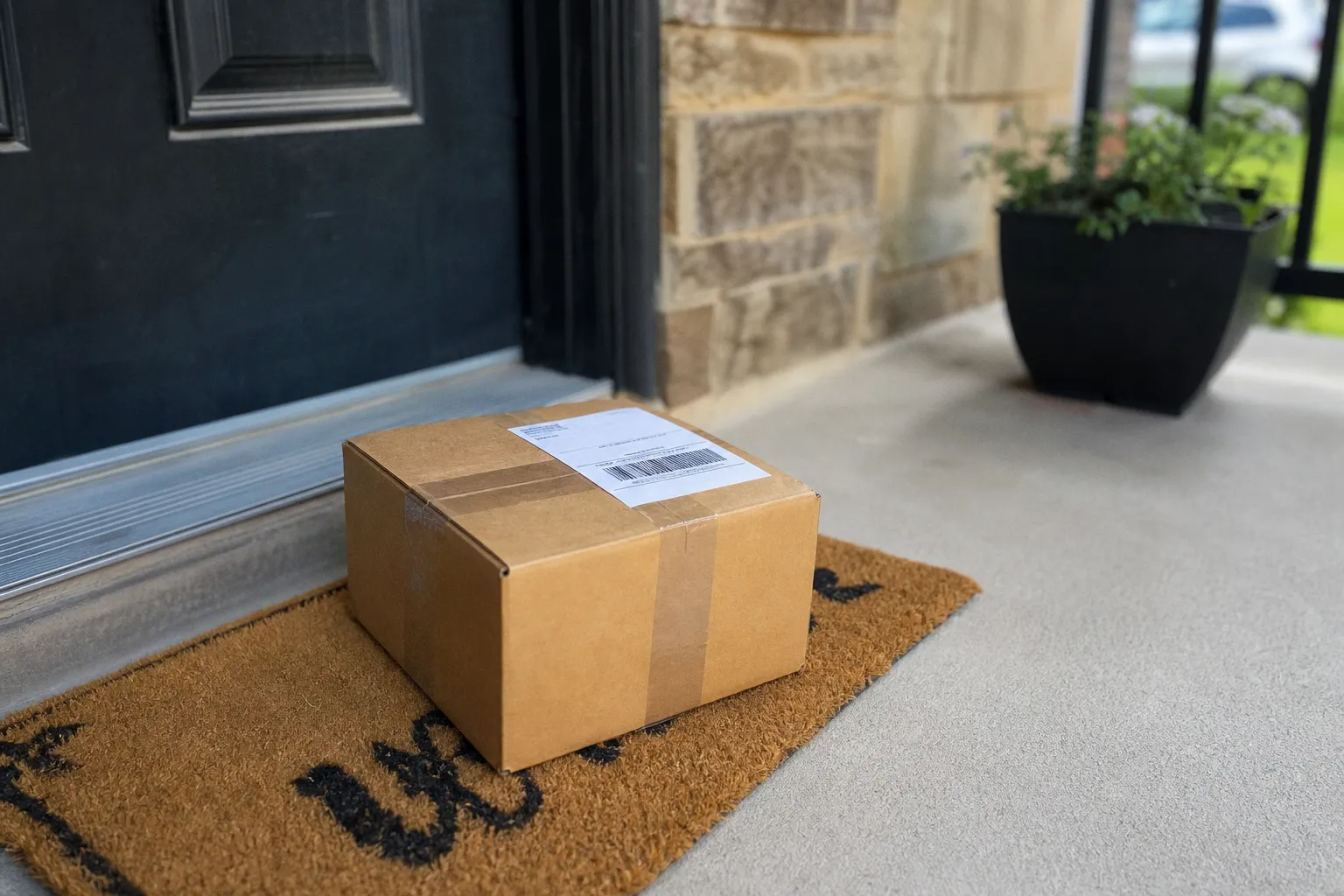
That is the uncomfortable little knot inside last mile delivery tracking. It is not just a logistics feature. It is a trust mechanism. When it works, the customer feels looked after before they need to ask. When it fails, your support team gets the “Where is my order?” avalanche, your carrier gets blamed, and your brand absorbs the emotional bruise.
For e-commerce teams, the buying decision is therefore not “which dashboard looks cleanest?” It is: which system lowers customer anxiety, gives operations enough visibility to act, and does not create a second maze for your warehouse, carrier network, and support agents to navigate?
Let’s walk through the five features that deserve your closest attention before you sign anything.
1. Real-time GPS visibility that reduces uncertainty, not just plots dots
Real-time GPS visibility is the feature everyone asks for first, and with good reason. Customers have been trained by food delivery apps, ride-hailing apps, and marketplace logistics to expect a moving picture of progress. A static “in transit” status now feels like a locked door.
But there is a difference between GPS visibility that delights and GPS visibility that quietly increases cognitive load.
If your tracking page shows a van icon crawling across a map but cannot explain whether the delivery window still holds, the customer is left doing mental math. “It’s three miles away. Does that mean ten minutes? Forty? Did it stop? Is the driver lost?” That kind of visibility is almost visibility theatre. It gives information without reassurance.
Good last mile delivery tracking translates location into meaning.
It should answer the customer’s real questions:
- Is my order genuinely on the way?
- Is the delivery window still realistic?
- How many stops are before mine, if that data is available and safe to show?
- Has anything changed that requires my attention?
- Can I still adjust instructions before the driver arrives?
For your team, GPS visibility should do something equally practical. It should help dispatchers see exceptions early, not after the customer complains. A driver running behind because of traffic, a cluster of failed delivery attempts in one postal zone, or a route that keeps slipping past promised windows should not require detective work.
The emotional benefit is easy to underestimate. A customer who can see that the parcel is moving, who receives an updated window, and who understands the delay is far less likely to interpret silence as neglect.
Tracking is not about satisfying curiosity. It is about lowering the customer’s sense that they have been abandoned after checkout.
When evaluating vendors, look beyond the map. Ask how often location refreshes. Ask whether ETA calculations are dynamic or merely copied from the carrier’s original estimate. Ask whether your support team sees the same timeline the customer sees, because few things feel more broken than a shopper quoting a tracking page your agent cannot access.
A clean customer-facing portal matters, too. If the tracking experience is cluttered with carrier jargon, cryptic scan codes, or four competing timestamps, you have simply moved the pain point from your inbox to your interface.
The best systems feel calm. They show enough to reassure, not so much that the shopper has to become a logistics analyst.
2. Automated proactive notifications that prevent the WISMO spiral
“Where is my order?” tickets are not just support tickets. They are tiny relationship fractures.
The customer expected you to speak first. You did not. So now they have to chase you.
That is the psychology behind WISMO, and it is why automated proactive notifications are one of the highest-leverage features in last mile delivery tracking. When configured well, SMS and email updates can reduce WISMO inquiries by up to 30–40%. That is not magic. It is simply the result of removing the need for customers to ask obvious questions.
The trap is thinking that more notifications automatically mean a better experience.
They do not.
A nervous brand sends everything: label created, parcel scanned, parcel moved, parcel breathed near a depot, parcel spiritually considered a left turn. The customer starts ignoring the messages, which defeats the whole point.
A thoughtful brand sends fewer, better messages at moments of emotional relevance.
Here is a useful way to separate helpful updates from noisy ones:
| Delivery moment | Weak notification | Better notification |
|---|---|---|
| Order dispatched | “Your order has shipped.” | “Your order is on its way and is expected to arrive Tuesday between 2–5 p.m.” |
| Delivery day begins | “Out for delivery.” | “Your driver is scheduled to deliver today. We’ll update you if the window changes.” |
| Delay occurs | No message, or a vague carrier status | “Your delivery is running late due to route delays. The new estimate is 6–8 p.m.” |
| Failed attempt | “Delivery exception.” | “We couldn’t complete delivery. Please choose a new time or update access instructions.” |
| Delivered | “Delivered.” | “Delivered at 3:42 p.m. Photo confirmation is available on your tracking page.” |
Notice the difference. The better notification does not merely state an event. It gives context, expectation, and a next step when needed.
That is the heart of proactive messaging: it nurtures the customer through the post-purchase period, when excitement and anxiety live side by side.
For e-commerce marketers, this is also where logistics becomes brand experience. Your email design, SMS tone, tracking page copy, and delivery exception language all teach the customer what kind of company they are dealing with. Are you calm? Are you clear? Do you speak like a human? Or do you suddenly sound like a freight terminal once the payment clears?
There is a useful parallel with digital reading habits here. People who buy secondhand e-ink devices for newspaper PDFs are often advised to verify used e-ink tablets before buying for PDF newspapers because the experience depends on details that are not obvious in the product photo. Delivery tracking is similar: the surface looks simple, but the small usability checks determine whether the experience feels smooth or regrettable.
When buying software, ask vendors to show the notification logic, not just the message templates. Can notifications be triggered by real operational events? Can they be segmented by delivery method, region, SKU type, or customer preference? Can customers choose SMS, email, or both? Can support agents see exactly what was sent and when?
Most importantly, can you suppress messages that do not help?
Because notification strategy should feel like guidance, not a firehose.
3. Proof of Delivery that protects trust on both sides
Proof of Delivery, or POD, is often treated as a defensive tool. And yes, it helps reduce “not received” claims and disputes. Digital signatures, photo capture, timestamped geofencing, and driver notes can all protect your business when a delivery is challenged.
But if we look at the human layer, POD is really about closure.
The customer wants to know: “Where did it land?”
Your support team wants to know: “What actually happened?”
Your operations team wants to know: “Was the process followed?”
Without strong POD, everyone is guessing with a slightly different version of the truth.
A timestamp alone may not be enough. “Delivered at 2:13 p.m.” tells the customer very little if the parcel is not at the front door. A photo helps, but only if it is clear, stored properly, and connected to the correct order. A signature helps, but not if it is unreadable or collected from the wrong person. Geofencing helps, but not if the driver can complete the stop far from the delivery location.
Strong POD combines evidence into a coherent delivery story.
For example:
1. The driver arrives within an acceptable geofence around the address.
2. The delivery is marked complete with a timestamp.
3. A photo is captured showing the parcel in a recognizable location, where local rules and privacy expectations allow it.
4. The customer receives a confirmation with access to the proof.
5. The support team can retrieve the same record without waiting for the carrier.
That last point matters more than teams expect. If your agents must open three portals, contact a carrier rep, or wait 48 hours for proof, the customer’s frustration grows in the silence. Even if the parcel was delivered correctly, the relationship suffers because resolution feels slow and opaque.
A dispute is not only won with evidence. It is softened by how quickly and calmly you can explain what happened.
There are also product-category differences to respect. A $19 accessory left in a mailbox does not need the same proof flow as a high-value electronics order, a regulated product, or a bulky item requiring scheduled delivery. Good tracking software should let you configure POD requirements by risk, value, destination type, or service level.
This is where e-commerce teams should resist the fantasy of one universal setting. Too little proof invites disputes. Too much proof creates friction, slows drivers, and can feel invasive to customers.
The right question is not “Does it have POD?” Nearly every serious platform will say yes. The better question is “Can POD adapt to the promise we made to the customer and the risk we carry on this order?”
4. Dynamic route optimization that improves the promise before it breaks
Route optimization is where the customer experience and the cost structure collide.
Last mile delivery is brutally expensive because it is fragmented by nature: individual addresses, traffic, access issues, delivery windows, failed attempts, driver capacity, and customer preferences all meet in the least forgiving part of fulfillment. Software that improves on-time delivery by an average of 10–20% through dynamic route optimization is not merely saving fuel. It is protecting the promise made at checkout.
Static routes are built on assumptions. Dynamic routes respond to reality.
That reality can include:
- Live traffic conditions that turn a neat afternoon route into a missed-window machine.
- Delivery windows that force sequence changes.
- Driver capacity constraints that make one route overloaded while another has slack.
- Failed attempts that need reallocation.
- Priority orders that must be moved earlier without wrecking the whole day.
- Weather, road closures, or local events that make yesterday’s route logic useless today.
For the customer, none of this complexity is visible. Nor should it be. They only feel the result: did the order arrive when you said it would?
For operations, route optimization should not be a black box that spits out a driver list and shrugs. Dispatchers need to understand why routes changed, where risk is building, and what trade-offs the system is making. If a platform optimizes purely for distance but ignores promised delivery windows, it may reduce miles while increasing customer pain. If it optimizes for speed but overloads drivers, service quality drops in the final handoff.
This is why you should evaluate route optimization as a behavioral system, not just a math engine. It shapes driver behavior, dispatcher decisions, customer expectations, and support volume.
Ask the uncomfortable questions during demos:
- What happens when a driver falls behind by 30 minutes?
- Does the ETA update automatically for affected customers?
- Can dispatchers manually intervene without breaking the route plan?
- Are delivery windows treated as hard constraints or soft preferences?
- Can the system handle mixed fleets, third-party carriers, or local courier partners?
- How does it learn from repeated failed attempts or difficult addresses?
The best platforms make the route feel alive, but not chaotic. They help your team act before the delivery promise collapses.
And from a marketing perspective, that is powerful. Acquisition work gets a customer to buy once. Fulfillment experience influences whether they believe you enough to buy again.
5. Integrated returns tracking that keeps the relationship alive after disappointment
Returns are often discussed as a cost center, which they are. But that framing misses something tender and commercially important: a return is a disappointed customer still talking to you.
They have not disappeared. They have not charged back. They have not necessarily decided against your brand. They are in a fragile post-purchase moment, and the experience you give them now can either preserve the relationship or quietly end it.
Integrated reverse logistics tracking lets customers initiate and track returns through the same portal or experience used for outbound shipments. That continuity matters. If the customer enjoyed clear delivery updates but then gets thrown into a clumsy returns portal with no status visibility, the relationship suddenly feels uneven. You were attentive when sending the product, vague when taking it back.
A strong returns tracking flow should answer the emotional and practical questions quickly:
- Has my return request been accepted?
- Do I need to print a label, schedule a pickup, or drop the item somewhere?
- Has the carrier received it?
- Has it reached the warehouse?
- Has it been inspected?
- When should I expect the refund, exchange, or store credit?
The operational side is just as important. Returns data touches inventory optimization, warehouse management systems, customer service, merchandising, and sometimes fraud prevention. If return tracking is bolted on as an afterthought, you lose visibility exactly when the order becomes more complex.
For example, a returned item may be resellable, damaged, incomplete, or routed to a different facility. The customer does not need every internal status, but your team does. If the tracking system cannot connect return movement with warehouse receiving and refund workflows, support agents become translators between disconnected systems.
That is where friction multiplies.
The customer says, “The carrier says you received it.”
The warehouse says, “It has not been processed.”
The support agent says, “Please allow more time.”
The customer hears, “We do not know where your money is.”
A better system gives everyone a shared sequence of truth. Not too much. Not too little. Enough to maintain confidence.
Returns tracking also gives marketers a subtle retention lever. A customer returning a size may still want the product. A customer returning a damaged item may still trust the brand if the recovery is gracious. A customer returning a gift may become a future buyer if the process feels respectful.
Reverse logistics is not separate from customer experience. It is customer experience under stress.
How these features work together, not as separate boxes
It is tempting to evaluate last mile delivery tracking feature by feature, with a neat grid and a score beside each vendor. That is useful up to a point. But customers do not experience your stack in modules. They experience one continuous emotional journey.
They buy.
They wait.
They wonder.
They receive.
Sometimes they dispute.
Sometimes they return.
Always, they remember how hard or easy it felt.
The strongest software connects the pieces. Real-time GPS feeds better ETAs. Better ETAs trigger smarter notifications. Notifications reduce WISMO tickets. POD resolves disputes quickly. Route optimization protects delivery windows. Returns tracking extends visibility after the first delivery attempt or post-purchase disappointment.
When these pieces are disconnected, the customer feels the seams. They get an SMS that conflicts with the tracking page. Support sees a different status than the carrier. A delivery photo exists but cannot be found. A return is in motion but not tied to the order record. Each seam adds cognitive load.
And cognitive load is where loyalty leaks out.
For e-commerce digital marketing teams, this is the part that deserves more attention. You can polish the pre-purchase funnel beautifully: sharper ads, better landing pages, cleaner checkout, stronger lifecycle flows. But if last mile delivery tracking creates anxiety after payment, the brand memory gets rewritten at the doorstep.
That does not mean logistics software must be perfect. Customers are remarkably forgiving when they feel informed and respected. They are much less forgiving when they feel ignored.
The questions to ask before you buy
You do not need to become a transportation engineer to evaluate tracking software well. But you do need to push past the shiny dashboard and ask how the system behaves when real life gets messy.
Use these questions in the buying conversation, especially with vendors who make the demo look effortless:
1. Can the platform show real-time delivery progress in language customers understand?
GPS visibility should reduce anxiety, not invite customers to decode operational noise.
2. Do notifications respond to meaningful events, or only basic status changes?
The best systems know when to speak, when to stay quiet, and when to give the customer a next step.
3. Is Proof of Delivery strong enough for your product risk?
Look for digital signatures, photo capture, timestamps, and geofencing where appropriate, but make sure the evidence is easy for support teams to retrieve.
4. Does route optimization protect delivery windows, not just reduce mileage?
A cheaper route that breaks promises is not truly cheaper once support tickets, refunds, and churn enter the picture.
5. Can returns be tracked in the same customer experience?
A graceful return can preserve trust. A murky one can undo months of careful nurture.
6. Will it integrate with your WMS, ERP, carrier tools, and support platform?
No single solution solves every last-mile challenge by itself. The handoffs matter as much as the features.
7. Can your team configure rules by region, product type, carrier, and customer preference?
Last mile delivery is too variable for rigid defaults to carry the whole experience.
The point is not to buy the platform with the longest feature list. The point is to buy the one that helps your customers feel informed and helps your team act before frustration becomes a ticket.
The real test: what happens when the delivery goes wrong?
Every last mile tracking demo looks pleasant when the order is on time, the driver is nearby, the customer is home, and the parcel lands neatly by the door.
That is not the real test.
The real test is the delayed van at 7 p.m. The apartment building with no access code. The customer who says the parcel is missing. The return that has been scanned by the carrier but not received by the warehouse. The delivery window that is slipping while your support queue is already full.
That is where good software earns its keep. Not by pretending last mile delivery can be made frictionless, but by making friction visible, explainable, and recoverable.
Last mile delivery tracking should help you keep a promise in public. It should give the customer enough confidence to wait without worry, and give your team enough context to intervene without panic.
Choose the system that treats tracking as a relationship layer, not a status page. Because by the time the package is out for delivery, the sale is already made — but the next sale is still being decided.