The Cloud Has Sound: The Unrelenting and Unseen Cost of A.I. Data Centers
Four signals landed within a six-day window in late June 2026. Each isolates a different cost vector in the cloud stack that retail operators treat as fixed overhead.
The Infrastructure Cost Curve
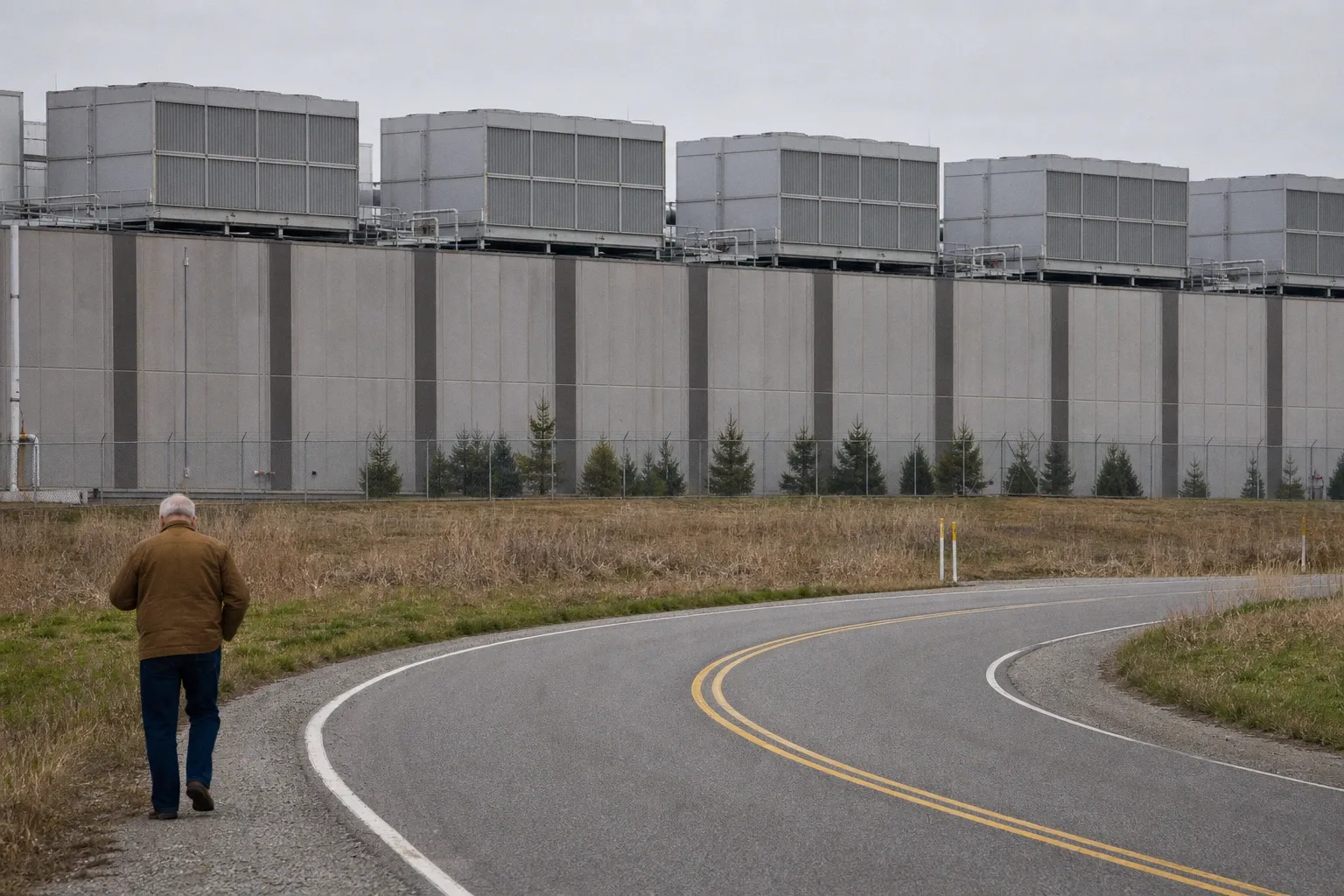
The New York Times published "The Cloud Has Sound: The Unrelenting and Unseen Cost of A.I. Data Centers" on June 22. The framing treats generative-AI compute as a non-trivial line item with downstream effects on every tenant sharing the same hyperscaler fabric. For e-commerce, the relevance is direct: catalog search, recommendation engines, dynamic pricing, and support agents all run on that fabric. A cost increase at the data-center layer does not isolate itself to AI workloads. It propagates through the unit-economics of every adjacent API call.
Action for operators: audit the margin profile of any service route that runs inference or embedding generation through a hyperscaler API. Compression in AI-adjacent features is the first-place signal that data-center cost has been passed through.
Regulatory Exposure on Hyperscaler Concentration
PYMNTS reported on June 25 that the EU is moving to extend Big Tech competition rules to cloud services, explicitly naming AWS and Microsoft Azure. The directive is not yet final, but the direction is confirmed: vendor-concentration risk on hyperscalers is now a regulatory variable, not only an operational one.
For e-commerce stacks running predominantly on a single provider, the binary question becomes migration cost versus exposure cost. Multi-region failover is no longer sufficient. Multi-cloud portability of stateful workloads — orders, inventory, customer profiles — is approaching compliance-grade status in the EU sales corridor.
Cyber Resilience as a Dependency Layer
On June 26, Redmond Channel Partner reported that Commvault and Microsoft expanded their strategic partnership around cyber resilience and cloud services, targeting data protection and recovery across the Microsoft stack. That stack hosts a meaningful share of retail transactional workloads.
The technical implication: backup, recovery, and ransomware-resilience tooling is consolidating around hyperscaler partnerships. E-commerce operators relying on third-party backup vendors should verify egress portability and independent key management before those partnerships deepen.
Geopolitical Weight on Physical Infrastructure
Eurasia Review published an op-ed on June 28 titled "The Next Battlefield Is The Cloud: Why Data Centers Are Becoming Strategic Targets." The framing treats physical data-center infrastructure as a geopolitical asset class. For e-commerce, this shifts infrastructure outage probability from "weather event" to "state-actor variable" inside the risk model.
Pros:
- Cloud cost pressure is now visible enough to justify internal FinOps investment
- Regulatory pressure creates a defensible business case for multi-cloud architecture
- Cyber-resilience partnerships consolidate accountability at the vendor level
Cons:
- Single-hyperscaler stacks face rising regulatory and cost exposure
- Geopolitical risk modeling for data-center dependency is not yet standard in retail risk frameworks
- Multi-cloud migration cost remains non-trivial and is frequently deferred until forced