The 10 retail trends that will redefine the industry in 2026
A retail trend cluster for 2026 is forming around three hard operating layers: channel mix, logistics execution, and store systems.
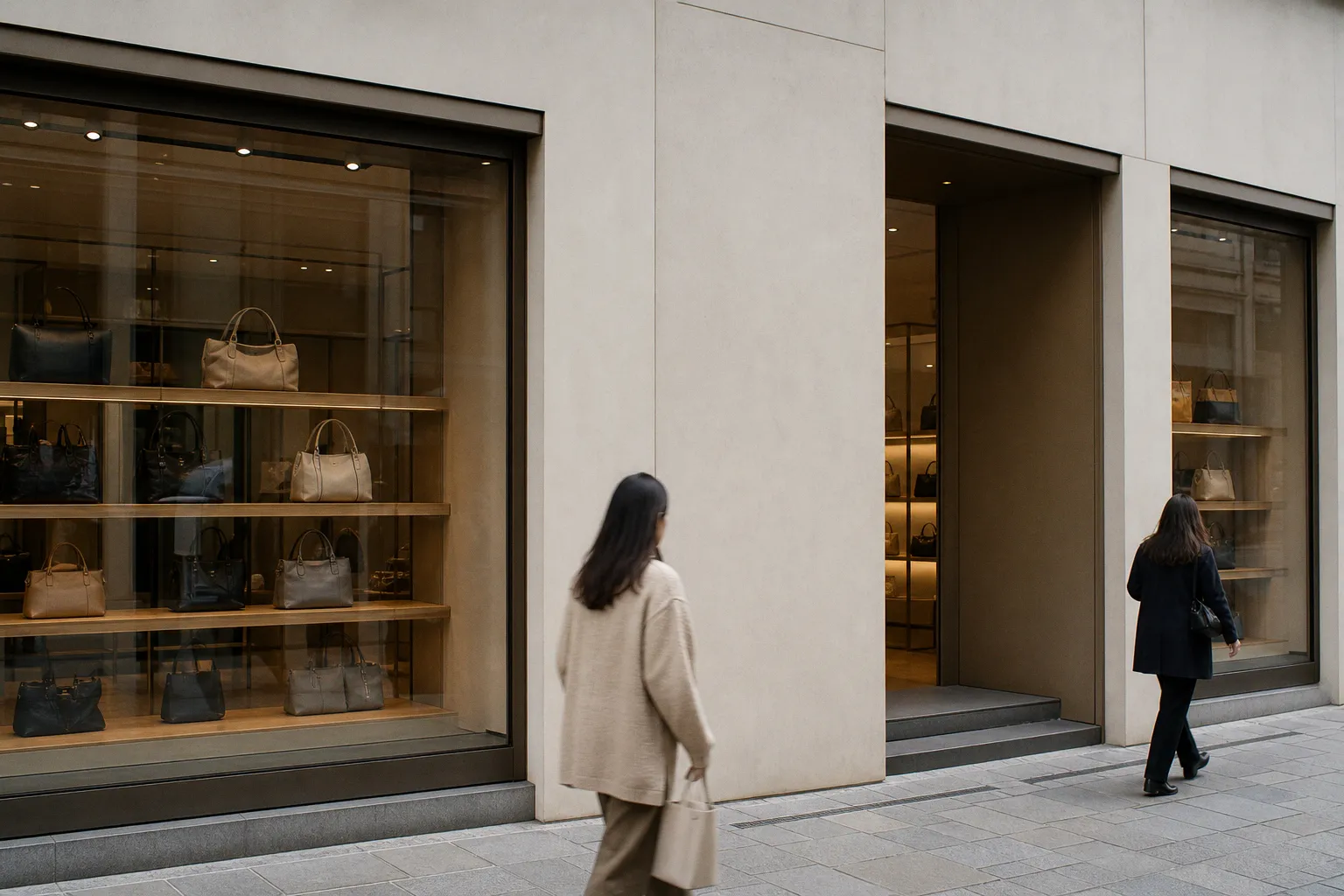
Outlet luxury is becoming a channel-weighting problem
36 Kr reports that new luxury boutiques are moving into outlet malls, with Winshang tracking more than 80 key outlet projects nationwide. In the first half of the year, more than 30 new or renovated luxury brand outlet stores opened, according to the report.
The named operators competing for tenants include Shanshan, Sasseur, Bailian, Times Outlet, The Mall, and Beiguo Outlet. The article identifies COACH, MICHAEL KORS, and Calvin Klein as the “Big Three of Outlet Luxury,” with Tory Burch opening three new outlet stores this year. ARMANI, ICICLE, and FENDI are also cited as brands launching outlet locations.
The operating logic is clear enough. Outlet malls are being treated as traffic infrastructure. Luxury tenants are described as both footfall engines and positioning assets. That matters for digital commerce because the store is no longer just a sales endpoint. It is a demand router.
The sharper data point is in full-price retail. Winshang Big Data says the opening-to-closing ratio for luxury stores in shopping malls, excluding outlets, was 0.56 last year and 0.58 in the first half of this year. The source frames this as a market where closed stores are rarely replaced.
For brands selling online, this is a channel signal. If premium labels shift physical deployment toward outlets and away from full-price malls, digital teams should audit:
- Assortment segmentation between full-price, markdown, marketplace, and outlet inventory.
- Attribution leakage when offline outlet traffic influences online branded search.
- Promotion cadence if consumers begin anchoring luxury discovery to value pricing.
- Geo-targeting logic around outlet catchments, not only city-center retail zones.
No broad conclusion is justified beyond the available evidence. But the pattern is measurable: outlet expansion is being used as a lower-risk channel for demand capture while full-price physical expansion appears more constrained.
Logistics and POS are back in the core stack
DHL is separately framing consumer and retail logistics around trends, challenges, and solutions. The available source detail does not specify those trends, so the safe conclusion is narrow: logistics is being positioned as a retail issue, not a back-office function.
That distinction matters. If 2026 retail planning is built around faster channel switching, more complex inventory routes, and mixed online-offline journeys, logistics latency becomes a commercial variable. It affects promise dates, replenishment timing, return handling, and margin protection.
openPR also flags evolution in liquor store POS software, describing the market as modernizing retail operations through intelligent POS solutions. The vertical is specific, but the system implication is wider. Store software is moving closer to the execution layer: transaction capture, inventory state, compliance workflow, and operational reporting.
For operators, the action item is not to buy every “intelligent” tool. It is to test whether store systems can produce clean operational data fast enough for commerce decisions.
Minimum checks:
- Inventory freshness across online and store surfaces.
- Order status integrity from purchase to fulfillment.
- Return and exchange visibility at SKU level.
- Promotion execution across POS, e-commerce, and paid media.
- Deterministic attribution where store visits or outlet exposure trigger online demand.
If the POS layer cannot expose reliable data, the marketing layer will overfit to incomplete signals. That is not a brand problem. It is a systems problem.
What to track before treating 2026 as a reset
The MSN headline points to ten retail trends that could redefine the industry in 2026, but the available evidence does not list them. The useful method is therefore to track observable pressure points instead of accepting a packaged trend list.
Three signals deserve priority.
First: channel reallocation. Luxury movement into outlets shows how brands can preserve physical reach while changing margin and customer-acquisition mechanics.
Second: logistics visibility. DHL’s retail logistics framing reinforces that fulfillment is part of the customer proposition, not a support queue.
Third: store-system modernization. The POS market signal shows that vertical retail is still upgrading the transaction layer, where data quality is either created or damaged.
Binary summary:
Positive: Retail operators have clearer infrastructure targets: outlet strategy, logistics throughput, POS data quality, and inventory routing.
Negative: Trend language can hide weak evidence. Without item-level data, store-system telemetry, and channel-specific margin analysis, “2026 transformation” remains a label, not an operating plan.