How Retail Automation and POS Technology Are Reshaping Store Operations
A hard operational gap is now visible in retail: physical stores are being asked to run with e-commerce-grade availability, checkout speed, and channel consistency while labor capacity remains constrained.
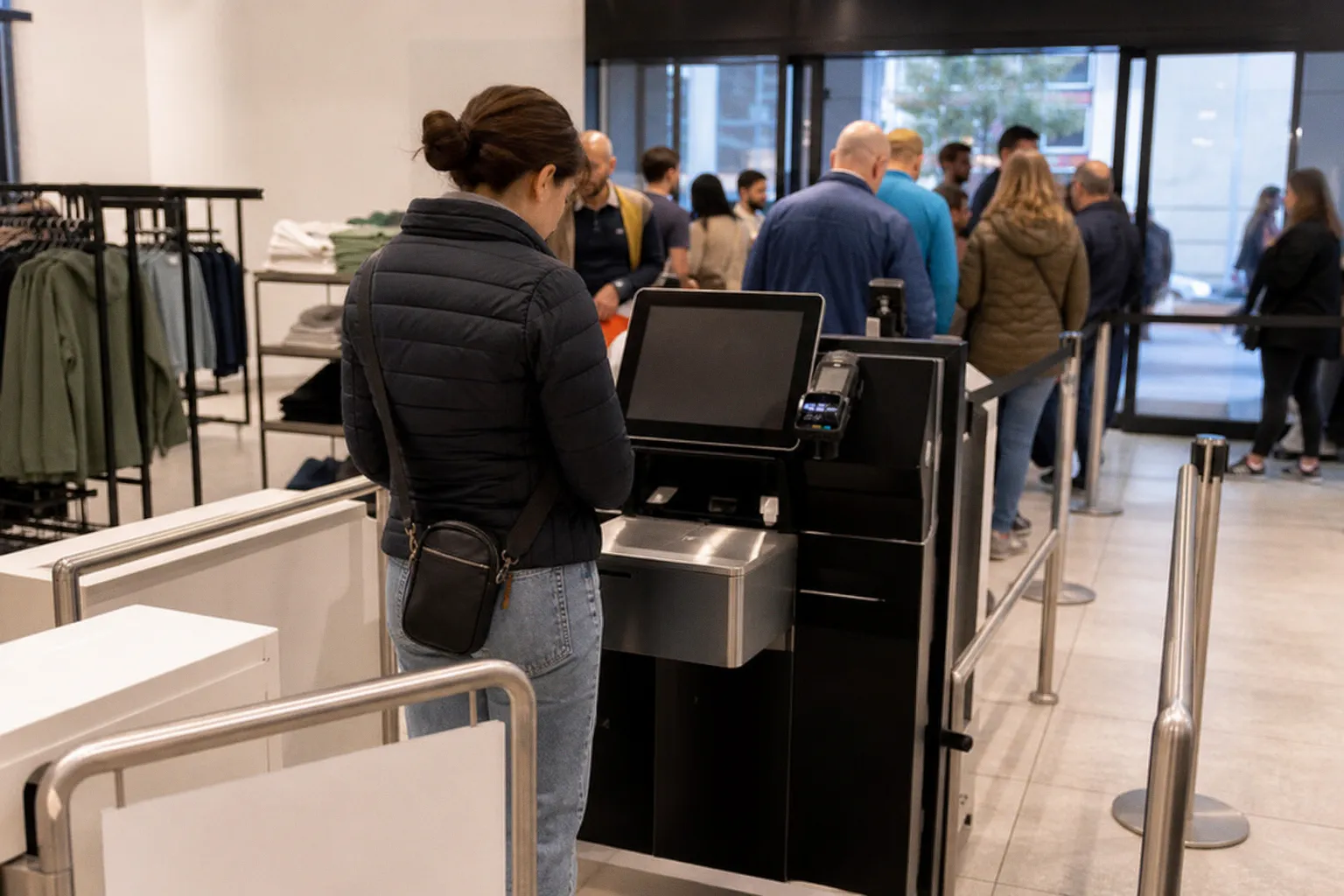
POS is becoming the automation bus
The old POS model was transactional. Scan item. Take payment. Close receipt.
The current model is different. The POS is being positioned as the operational hub through which automation flows across store systems. The core workflows are not abstract AI demos. They are the repetitive processes that create latency and error:
- stock counts updating at sale;
- purchase orders generated at reorder thresholds;
- scheduled reporting routed to required teams;
- online availability reflecting in-store inventory in real time;
- fulfillment workflows tied back to store-level stock.
The pressure case is clear. According to the Slashdot-cited analysis, one million retail jobs remain unfilled in the US. It also states that 74% of retailers report inability to fill customer-facing positions. That matters because automation here is not replacing a perfect labor model. It is compensating for an incomplete one.
The technical distinction is important. A POS platform with automation does not remove management judgment. It changes the manager’s task from manual detection to exception handling. The system watches thresholds. The operator approves, adjusts, or rejects.
That is a cleaner architecture.
Inventory distortion is the main failure mode
The strongest data point is inventory distortion. The analysis cites IHL Group’s 2025 research estimating the combined cost of stockouts and overstock at $1.73 trillion annually for global retailers.
The stated root cause is not primarily bad buying. It is lag. Stock runs low. Nobody sees it in time. The store reacts late. The result is missed sales, excess inventory, or both.
Automated replenishment attacks that lag directly. Reorder points are configured per SKU using lead time and sales velocity. When stock reaches the threshold, the system generates a purchase order with supplier details and suggested quantities. Approval can be reduced to one click.
The reported performance delta is material:
- over 97% inventory accuracy with real-time automated tracking;
- 65% inventory accuracy as the manual baseline;
- 19% reduction in stockout rates;
- 19% improvement in inventory turnover.
These numbers define the business case better than vendor language does. If a retailer cannot measure current inventory accuracy, stockout rate, and turnover by location, it cannot verify whether automation is improving the system or just adding software cost.
The next layer is demand forecasting. The source distinguishes fixed-threshold replenishment from AI-powered forecasting. Threshold automation reacts to depletion. Forecasting attempts to anticipate it. That is a higher-risk implementation path because it depends on data quality, SKU behavior, and exception controls. Operators should not treat both as the same project.
Payments and store systems are converging
The wider source cluster points in the same direction, but with fewer confirmed details. Retail Technology Innovation Hub reports that Adyen is powering online and offline payments for electronics retailer CeX Malaysia. The available snippet does not provide implementation depth, but the headline itself signals the same platform logic: payment infrastructure is being unified across channels.
That matters for commerce teams because fragmented payments and fragmented inventory create the same failure pattern. The customer sees one brand. The system behaves like separate stores, websites, and terminals.
Food & Beverage Magazine’s item on ECRM Winter Sessions in Dallas references retail velocity and center store innovation. Vogue’s piece on American retailers frames the broader retail survival discussion. Those signals are less technical from the available snippets, but they reinforce the operating environment: stores are under pressure to move faster without adding proportional labor or overhead.
The practical audit is binary.
Green path: POS data updates inventory in real time, replenishment rules are SKU-level, purchase orders are system-generated, reports run without manual pulling, and online availability reflects store stock.
Red path: stock checks are manual, reordering depends on memory or phone calls, reporting requires spreadsheet assembly, and store inventory is not trusted by e-commerce systems.
Retail automation is not a branding layer. It is a control system. The retailers that benefit will be the ones that instrument the workflow first, then automate only the parts where latency and error are measurable.